Trains 1804 — 2011 · 12 images
 1857
 1934
 1938
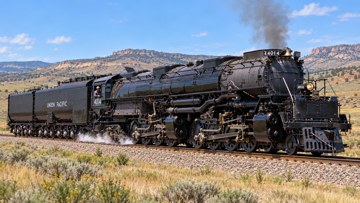 1941
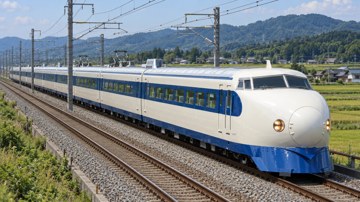 1964
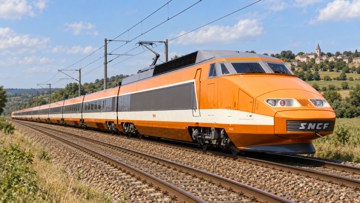 1981
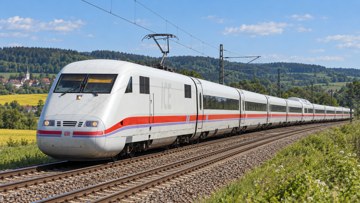 1991
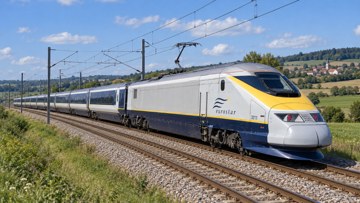 1994
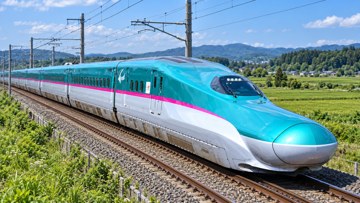 2011
Behind each train
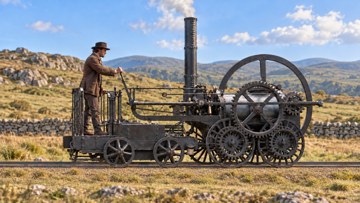 1804
Penydarren: steam meets the limits of the track
History and sources ↗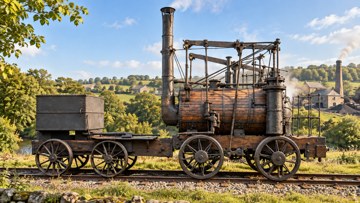 1813–1814
Puffing Billy: from experiment to everyday work
History and sources ↗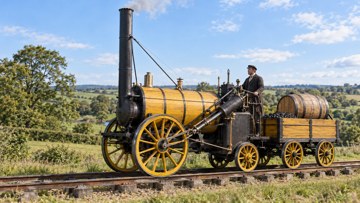 1829
Rocket: a combination that made history
History and sources ↗SIX MOMENTS / 1804–1991
Different answers across time
A selection from the channel’s research. Technologies overlapped: this is not a simple chain of replacements.
- 1804
Penydarren
Steam could move the load, but the track also had to withstand it. In 1804, Trevithick's locomotive hauled iron and riders along the Merthyr Tramroad; damage to the rails limited its practical use.
Explore the article ↗ - 1813–1814
Puffing Billy
Puffing Billy explored traction through the contact between wheels and rails. Alongside the other early mechanisms, its story helps explain a central question for locomotive builders: how to make the machine pull its load.
Explore the article ↗ - 1829
Rocket
Rocket won the Rainhill Trials in 1829 by bringing together features that supported effective steam production. The surviving locomotive was altered afterward, so the engine we see today carries the history of both the competition and its later working life.
Explore the article ↗ - 1934
Diesel 3
Introduced in 1934, the Dutch Diesel 3 combined three cars with its own diesel-electric traction. Its streamlined shape and silver-grey appearance made the train a public attraction, illustrating how modern railway design could become a cultural symbol.
Read the museum or railway source ↗ - 1981
TGV Sud-Est
The train that reached passengers was not the turbine prototype. Electric TGV Sud-Est trains began Paris–Lyon commercial service in 1981, showing how the path from an experiment to a working railway can change the technology adopted.
Read the museum or railway source ↗ - 1991
ICE 1
Germany's ICE 1 entered regular passenger service in 1991. High-speed engineering now had to become an everyday journey, with trains carrying people between cities according to a timetable rather than making a single demonstration run.
Read the museum or railway source ↗